

Trump’s Tariff Threat Looms Over Bitcoin’s Fragile Rally
New trade tensions could curb investor risk appetite as on-chain data already signals weakness for the cryptocurrency.

Donald Trump‘s announcement of new trade tariffs introduces a macroeconomic pressure point that could impact Bitcoin’s recent price rally, which saw it climb past $97,000 in recent days.
The plan, published on the Truth Social platform on January 17, outlines a 10% tariff on all goods shipped to the United States from Denmark, Norway, Sweden, France, Germany, the United Kingdom, the Netherlands, and Finland. The measures are set to begin on February 1, 2026.
That rate is scheduled to increase to 25% starting June 1, 2026.
Tariffs, which are taxes on imports, raise the cost of international trade, often leading to retaliation and increased macroeconomic uncertainty. In response, investors typically adjust their exposure to assets considered high-risk, a category that includes Bitcoin (BTC).
This scenario is not without precedent. Last year, tariffs applied to China by the Trump administration, along with other factors, affected both traditional markets and BTC. The current announcement revives fears of a similar environment where trade tensions dampen risk appetite.
At the time of this report, Bitcoin is trading slightly above $95,000, with the market yet to react to Trump’s statements. Any potential effects would likely materialize closer to the indicated dates.
BTC price chart with weekly candles. Source: TradingView.
Bitcoin’s Recent Rally Under Scrutiny
Compounding the potential danger from a new tariff policy, a recent analysis from the firm CryptoQuant characterizes BTC’s current move as a “bear market rally.”
This term describes price increases that occur within a general negative trend and tend to exhaust themselves before consolidating into a sustained recovery.
According to the report, Bitcoin rose around 21% from November 21, following a previous drop of nearly 19% that confirmed a bear market by breaking below the 365-day moving average.
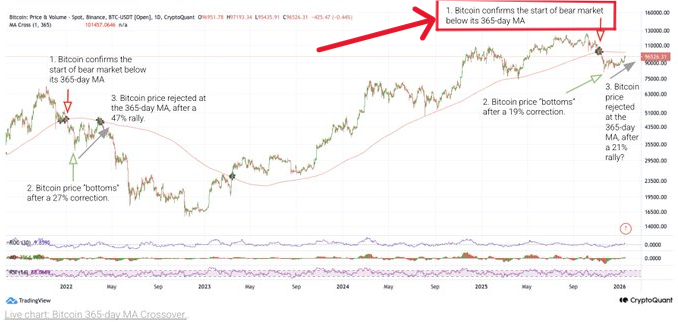
“Bitcoin confirms the start of a bear market after falling below the 365-day moving average.” Source: CryptoQuant / X.
This moving average, a key line between bullish and bearish phases, is currently near $101,000, a level the price has not managed to reclaim.
At the same time, CryptoQuant reports that demand conditions show only marginal improvements. While U.S.-linked indicators like the Coinbase premium turned briefly positive, exchange-traded funds (ETFs) have only halted net sales after shedding some 54,000 bitcoins in November, without showing evidence of sustained accumulation.
On-chain data reinforces this caution. Apparent demand for Bitcoin contracted by approximately 67,000 units in the last 30 days, while inflows to exchanges increased to a weekly average of 39,000 bitcoin. Historically, higher flows to exchanges often precede selling pressure.
In this context, Trump’s tariff announcement adds an external factor that could amplify volatility. If trade tensions lead to a deterioration in the global financial climate, Bitcoin’s recent rally could face additional obstacles.


