

Galicia Braces for Peak in Bad Loans, Eyes 2026 Rebound After HSBC Integration
Argentina's financial giant navigates rising consumer stress and the one-time costs of its massive HSBC acquisition.
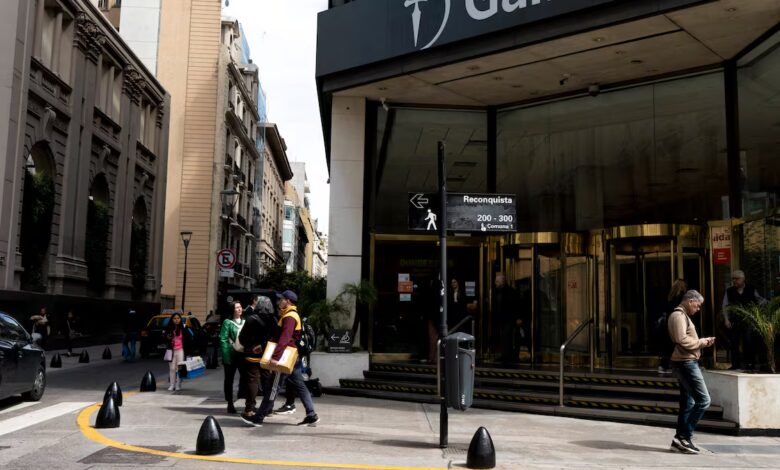
Argentina’s largest private bank, Grupo Financiero Galicia (GGAL), is grappling with a surge in consumer defaults, a direct reflection of the economic pressures facing households across the nation. While the bank reported a significant rise in its non-performing loan portfolio, management has signaled to investors that the worst of the credit deterioration is expected to peak in early 2026, setting the stage for a planned recovery.
[Image: A bustling street in Buenos Aires’ financial district, symbolizing the economic activity and challenges discussed.]
The financial strain became tangible in the bank’s latest report, which showed its portfolio of irregular loans climbing to 5.8% in the third quarter of 2025, a sharp increase from the 4.4% recorded just three months prior. This spike is not a broad-based issue but is acutely concentrated in the most sensitive consumer segments: personal loans and credit card debt, where individuals are struggling to keep pace with their obligations.
In a direct address to the market, CFO Gonzalo Fernández Covaro laid out a clear, if challenging, timeline. He projected that the default rate would continue its ascent, likely reaching a zenith of between 6% and 7% around March of next year. The bank is provisioning accordingly, with its “cost of risk”—the capital set aside to absorb these losses—expected to mirror this peak. However, Covaro’s forecast was not without a silver lining, as he anticipates both metrics will begin a steady decline through the remainder of 2026.
### A Healthier Horizon
The basis for this forward-looking optimism lies in a critical divergence within the bank’s loan book. “The new generation of consumer loans is showing much better behavior than the old portfolio,” Fernández Covaro explained, highlighting a key dynamic. While the bank must navigate the turbulence caused by older, riskier loans, the newer credit being issued is proving more resilient. This transition, however, has been overshadowed by a massive one-time accounting event. Grupo Financiero Galicia posted a net loss of ARS$87.7 billion for the quarter, a figure almost entirely attributable to the extraordinary expenses incurred while integrating the recently acquired local operations of HSBC.
[Image: A graphic or chart illustrating the projected peak and decline of loan default rates.]
Looking toward 2026, Galicia’s strategy for a return to robust profitability is threefold. The bank is targeting a return on equity (ROE) of 11-12%, a significant turnaround powered by a combination of aggressive cost-cutting, including a workforce reduction of 2,000 employees, the gradual cleansing of its loan portfolio as healthier credit replaces troubled debt, and the operational synergies gained from the full absorption of HSBC Argentina.
Despite the current headwinds, Galicia’s leadership expressed confidence in its capital position, stating there are no immediate plans to raise additional funds to support its expanded operations. The bank’s journey through this credit cycle offers a microcosm of the broader Argentine economy—a story of absorbing immediate shocks while strategically positioning for a more stable future, betting that the peak of the storm will indeed give way to calmer seas.


